
Dosage is one of the most misunderstood, but at the same time most crucial, elements in red light therapy, light treatment and photobiomodulation (PBM / photobiomodulation). Many people associate effective PBM with the highest possible effect or the longest possible treatment time. Within professional photobiomodulation, this is a simplification that in practice often results in a reduced biological response.
This article explains how dosage in PBM actually works, how irradiance and amount of energy works together, and why correctly dosed red light therapy is crucial for a stable and predictable effect, especially in chronic pain, recovery and long-term light treatment.

What is meant by dosage in photobiomodulation (PBM)
I photobiomodulation dosage describes how much light energy actually reaches the tissue and how long the stimulation lasts. In contrast to dietary supplements or pharmaceuticals, where dose is measured in milligrams, dose is measured in light treatment as energy per area over time.
Dosing in PBM always consists of several factors working together: wavelength, irradiance, processing time and total amount of energy. Without control of these parameters, it is impossible to know whether red light therapy provides biological stimulation or only superficial exposure.
Irradiance (mW/cm²) – light intensity per area
Irradiance, measured in milliwatts per square centimeter (mW/cm²), describes how much light energy hits the tissue per second. This is one of the most important parameters in professional photobiomodulation, but also one of the most misunderstood.
Too low an irradiance does not produce a sufficient biological response. Too high irradiance, on the other hand, can lead to thermal stress or reduced cellular sensitivity. Professional red light therapy therefore operates within documented intensity areas that have been investigated in PBM research.
It is also important to be aware that stated power from manufacturers does not necessarily reflect actual irradiance during use, which makes technical documentation and measurement data crucial.
Energy dose (J/cm²) – total light energy over time
Energy dose, measured in joules per square centimeter (J/cm²), describes the total amount of light energy delivered to the tissue during a treatment. The energy dose is calculated from irradiance multiplied by treatment time.
Within photobiomodulation (PBM) energy dose is a management tool for biological response, not a measure of "strength". A large number of studies in photobiomodulation shows that biological effect does not increase linearly with increasing dose.
The biphasic dose response in PBM
Photobiomodulation follows a biphasic dose-response pattern, where both too low and too high a dose produces a weaker effect than a moderate, correctly chosen dose. This principle is fundamental in professional light treatment.
Properly dosed PBM can support cellular processes, while overdosing can lead to reduced response or the need for longer recovery. This is the main reason why professional red light therapy is not about maximum effect, but about optimal biological stimulation.
How dosage affects mitochondria and cell function
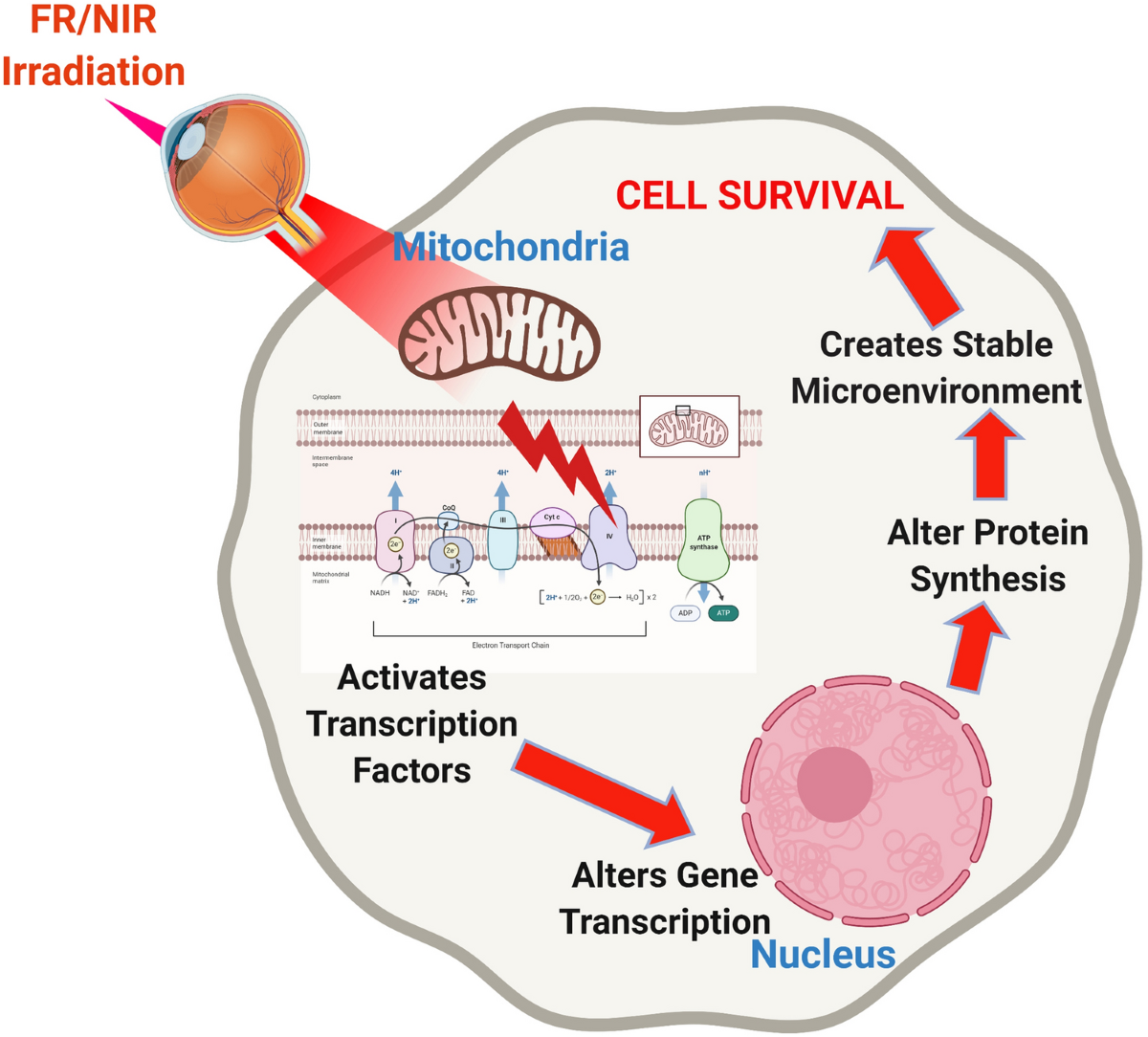
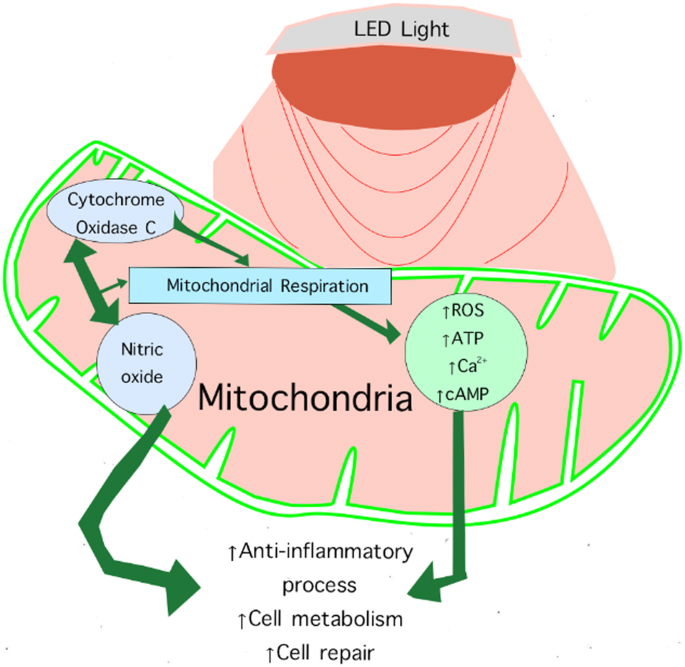
At the cellular level, red and near-infrared light is absorbed, among other things, in the mitochondria. When dosed correctly PBM this can affect energy metabolism, electron transport and the cell's regulatory mechanisms.
Too high an energy load, on the other hand, can increase oxidative load without a corresponding adaptive response. This illustrates why correct dosage is crucial, especially with wood chronic pain, recovery and long-term red light therapy.
The difference between spot treatment and whole body PBM
Dosing in photobiomodulation must always be considered in connection with the treatment area. Spot treatment can provide high local irradiance over a short time, while whole body PBM provides more even exposure over larger surfaces.
Professional red light therapy often uses panels or whole-body solutions to ensure stable and predictable energy distribution, which is difficult to achieve with small, point-based solutions alone.

Dosage in professional red light therapy versus simpler solutions
A common reason for lack of effect with home-based red light therapy is insufficient or inconsistent dosage. Many products are marketed without clear information about actual irradiance or recommended energy dose.
Professionals PBM systems distributed by Uno Vita is developed for stable performance, documented specifications and repeatable dosage. This makes it possible to use photobiomodulation as a long-term and structured form of light treatment.

Why more light does not always produce a better effect
Within photobiomodulation "more" rarely equals "better". Overdosing can lead to a reduced biological response and unwanted stress. Professional red light therapy therefore focuses on quality, precision and correct use, not extreme effect values.
Properly dosed PBM is about supporting the body's own regulatory processes, not overriding them.
About Uno Vita's editorial staff
This article has been prepared by Uno Vita's specialist editorial team as part of our work with knowledge-based health technology. The content is intended as general information and does not replace medical advice. Uno Vita AS works with documented technology within photobiomodulation, red light therapy, infrared heat and related areas, with a focus on quality, safety and professional integrity. Freedom of expression and open professional discussion are a fundamental part of this work.
