Ground contact, also called grounding or earthing, involves direct electrical contact between the body and the earth’s natural electrical potential. Throughout its evolution, humans have been in continuous contact with the ground, either by walking barefoot or through natural materials that conducted electricity. This only changed relatively a few thousand years ago, and especially over the last 100–150 years, when insulating shoes, floors, and building materials became the norm. Today, many people are in practice only in contact with the earth for a few summer months each year. Grounding is therefore often described as one of the simplest and most natural methods of restoring this contact.

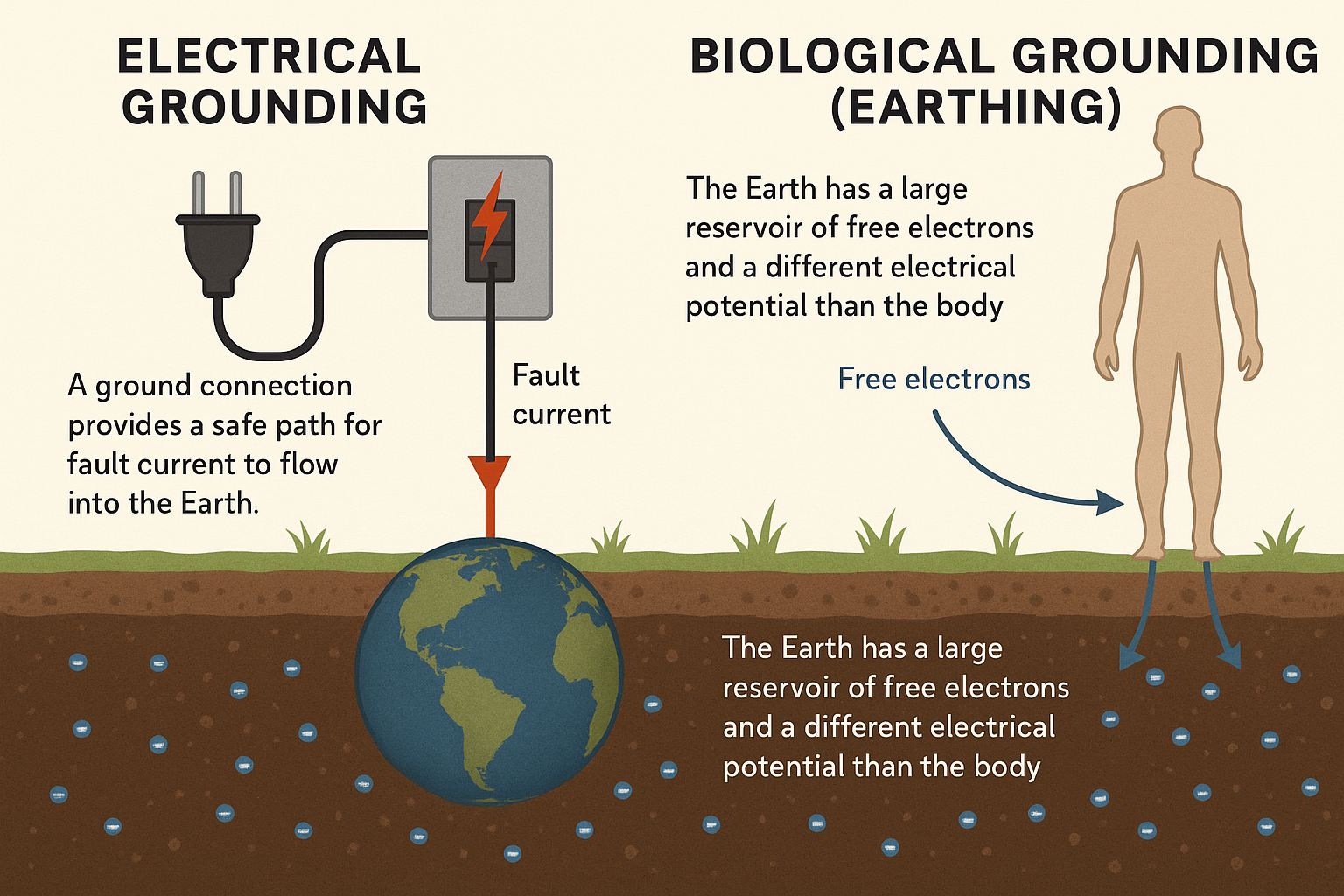
Research and experiences with grounding
Research and clinical experience suggest that ground contact may be relevant for sleep, recovery, pain perception, and general well-being. In a study in which a group of people slept grounded for 30–40 days, the following self-reported changes were observed: 85 percent fell asleep faster, 93 percent slept better through the night, 82 percent experienced reduced muscle stiffness, 74 percent reported a reduction or disappearance of pain, and 78 percent experienced better general health. These are self-reported findings and must be interpreted soberly, but they illustrate why interest in grounding has increased significantly in recent years.
Uno Vita recommends grounding sheets to many clients at the Clinic for Integrative Medicine, precisely because sleep provides many hours of stable ground contact. Grounding has, among other things, been shown to be able to counteract the aggregation of red blood cells, which can occur in cases of oxidative stress and low antioxidant status. Since grounding supplies electrons, some researchers describe this as an effect that can be compared with antioxidants. Better blood flow may contribute to improved oxygen distribution in the body, which in turn may be beneficial for several physiological processes.
Thermography and clinical observations
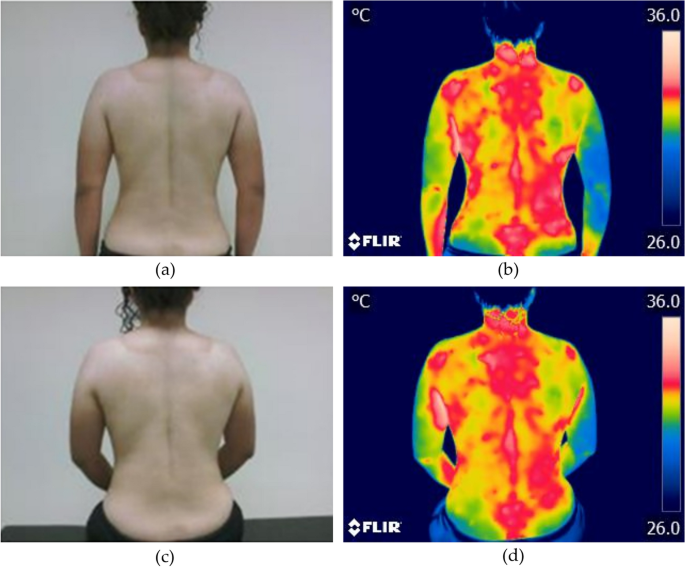

A commonly used illustration in the grounding literature is thermography, that is, infrared thermal imaging. In one well-known example, thermographic images were taken of a 44-year-old woman with chronic back pain before and after grounding. The image before showed clear warm areas associated with pain and inflammation, while the image after four nights of grounding showed a marked reduction. After four days, the woman reported a 30 percent reduction in pain, a 70 percent reduction in pain that disturbed sleep, and a 30 percent reduction in morning stiffness. After four weeks, she reported an 80 percent reduction in pain, no sleep disturbances, and a 70 percent reduction in morning stiffness. This is a single case and cannot be generalized, but it illustrates how some individuals respond quickly to contact with the earth.
How to get contact with the earth outdoors
The most direct way to achieve contact with the earth is to walk barefoot outdoors in nature. Soil, grass, rock, and sand provide direct contact, and the beach and salt water also offer a beneficial combination of natural electromagnetism and sunlight. This should be done as often as conditions allow.
Contact with the earth indoors and why products are used
When we are indoors, we are normally insulated from the earth because floors, beds, furniture, and shoes are not electrically conductive and are not connected to ground. To achieve contact with the earth indoors, there are therefore products that connect the body to ground either via a grounded outlet or via a ground rod outside the house. It is important to clarify that this only draws the earth potential, not electrical current.
 <\/div>
<\/div>
<\/div>
<\/div>
<\/div>
Grounding solutions you can use indoors<\/p>
One of the simplest and most effective solutions for indoor grounding is to sleep on grounding sheets. Uno Vita supplies both classic cotton grounding sheets with silver thread and newer Evolution sheets with a high silver content.<\/p>
Classic grounding sheets consist of approximately 3 percent silver thread and 97 percent cotton. These work well, but require direct skin contact or very thin natural materials between the body and the sheet. These are the sheets used in most of the studies referred to in the grounding literature. You can find them here, among other places: https:\/\/unovita.no\/products\/softsilvertm-earthing-sheet-50x-200-universal<\/a><\/p>
Evolution grounding material consists of around 50 percent pure silver thread combined with Tencel and Lyocell from sustainable eucalyptus. When the silver content exceeds approximately 35 percent, direct skin contact is not necessary. The body’s natural moisture is sufficient to ensure good conductivity, and a regular cotton sheet can be used on top. This provides better hygiene, longer lifespan, and in addition a certain shielding effect against low- and high-frequency radiation from below.<\/p>
For sedentary work, grounding mats are often used. These are available in both textile and steel variants, as well as classic rubber and carbon mats that are primarily used under the feet, for example during PC work. An example can be found here: https://unovita.no/products/jordingsmatte-earthing-mat Safety and Norwegian conditions All grounding products from Uno Vita are supplied with specially developed plugs adapted for grounded EU sockets. The plugs have built-in resistance that prevents strong current from passing through the cord, and they are designed so that they only make contact with ground, not live parts. This makes use safe when the product is used correctly. If you are unsure whether the electrical installation in your home is in proper condition, it is advisable to have it checked by a licensed electrician. Concluding assessment Grounding is not medical treatment and does not replace healthcare. It is a biophysical principle that can be included as part of a holistic lifestyle together with good water, daylight, movement, and reduced electrical noise. Studies and experience indicate that many people experience better sleep, less pain, and increased well-being, while the research field is still evolving. About Uno Vita's editorial team Uno Vita AS <\/div>
 <\/div>
<\/div>
<\/div>
This article has been prepared by Uno Vita's editorial team and is based on scientific literature, clinical experience, and more than 15 years of work with biophysics, grounding, electromedicine, and integrative health technology. The content is intended as general professional information and should not be understood as medical advice, diagnosis, or treatment. In the event of health concerns, it is always recommended to contact qualified healthcare professionals. Uno Vita AS is based in Moss, Norway. Freedom of expression and professional communication are central to Uno Vita's work.
Telephone: (+47) 22 09 18 80 - Sjøgata 15, 1516 Moss, Norway
Copyright © 2025.